For international Walmart Marketplace sellers, payment infrastructure is no longer just a back-office consideration. The way sellers receive, convert, and manage marketplace payouts can materially affect profitability, liquidity, supplier payments, and long-term scalability.
As Walmart Marketplace continues expanding globally, more cross-border sellers are entering the platform from regions across Asia, Europe, Latin America, and the Middle East. However, international disbursement workflows remain a significant operational challenge—especially for businesses dealing with:
- Multi-currency payouts
- Foreign exchange (FX) volatility
- Cross-border supplier settlements
- Marketplace reserve holds
- Banking restrictions in emerging markets
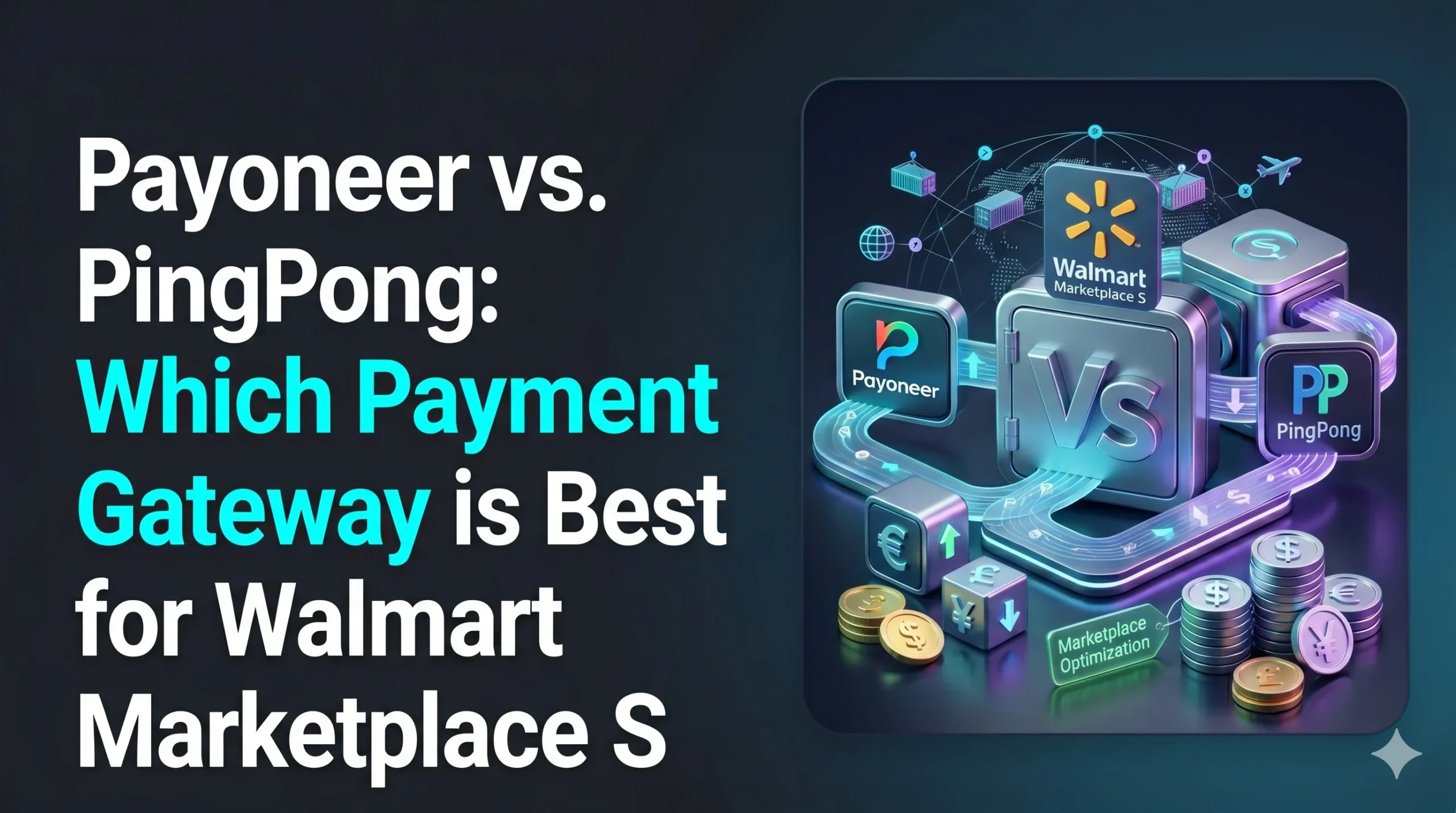
Two of the most commonly used payment providers for Walmart Marketplace sellers are Payoneer and PingPong Payments. Both platforms are heavily focused on global e-commerce disbursements and offer marketplace integrations designed for international sellers.
But while the two services overlap in several areas, their fee structures, treasury capabilities, FX workflows, and operational strengths differ in meaningful ways.
This guide provides a detailed, neutral comparison of Payoneer vs. PingPong specifically for Walmart Marketplace sellers, including payout infrastructure, FX optimization, compliance considerations, scalability, and real-world limitations.
Why Payment Infrastructure Matters for Walmart Sellers
Walmart Marketplace sellers often focus heavily on:
- Product sourcing
- Buy Box optimization
- Advertising efficiency
- Inventory management
However, cross-border payout inefficiencies can quietly erode margins over time.
For example:
- High FX spreads reduce net revenue
- Delayed disbursements affect inventory cycles
- Intermediary bank fees increase operational costs
- Poor liquidity management limits scaling capacity
As Walmart expands internationally, sellers increasingly require:
- Multi-currency receiving accounts
- Faster settlement infrastructure
- Transparent conversion rates
- Treasury flexibility
- Reliable supplier payment rails
This is where specialized fintech providers become relevant.
Overview of Payoneer and PingPong
What Is Payoneer?
Payoneer is a global financial technology platform focused on cross-border payments for:
- Freelancers
- Marketplace sellers
- SMB exporters
- Agencies
- Remote-first businesses
The company provides:
- Multi-currency receiving accounts
- Marketplace payout integrations
- Cross-border supplier payments
- Currency conversion services
- Local bank withdrawals
Payoneer is widely used across marketplaces such as:
- Amazon
- Walmart
- Fiverr
- Upwork
- eBay
Its broad ecosystem makes it particularly attractive for sellers managing multiple income streams beyond e-commerce alone.
What Is PingPong?
PingPong Payments is a fintech company specializing primarily in e-commerce marketplace disbursements.
The platform is heavily focused on:
- Amazon sellers
- Walmart Marketplace merchants
- Shopify merchants
- Cross-border supply chain payments
PingPong’s core value proposition centers around:
- Lower FX costs
- E-commerce treasury optimization
- Supplier payment infrastructure
- Cross-border B2B settlement
Compared to Payoneer, PingPong is generally more specialized toward large-scale marketplace commerce rather than freelancer ecosystems.
Walmart Marketplace Compatibility
Both providers support Walmart Marketplace payouts, but their integration experiences differ slightly depending on seller region and account structure.
| Feature | Payoneer | PingPong |
|---|---|---|
| Walmart Marketplace support | Yes | Yes |
| Multi-currency receiving accounts | Yes | Yes |
| Marketplace-focused onboarding | Strong | Very strong |
| Local withdrawal support | Broad global coverage | Broad coverage |
| Supplier payment infrastructure | Moderate to strong | Strong |
| Freelancer ecosystem support | Extensive | Limited |
| Treasury optimization tools | Moderate | Advanced for e-commerce |
| Scalability for large sellers | Strong | Strong |
For Walmart-only sellers, PingPong may feel more specialized. For businesses operating across freelancing and marketplace ecosystems simultaneously, Payoneer often provides broader flexibility.
FX Conversion and Exchange Rate Transparency
Why FX Costs Matter
For international Walmart sellers, foreign exchange costs are often one of the largest hidden operational expenses.
Even relatively small FX spreads can significantly impact annual margins.
Example
A seller processing:
- $80,000 monthly
- With a 2% effective FX spread
could lose approximately:
- $1,600 per month
- $19,200 annually
through conversion inefficiencies alone.
Payoneer FX Structure
Payoneer generally applies:
- Currency conversion spreads above the mid-market rate
- Withdrawal fees in some corridors
- Marketplace transfer-related charges depending on currency routes
Advantages
- Broad currency support
- Familiar interface for freelancers and SMBs
- Strong payout flexibility
Limitations
- FX pricing may not always be the lowest for high-volume sellers
- Some fees vary by region and withdrawal method
Payoneer’s pricing model works well for many mid-sized businesses, though high-volume sellers often compare rates carefully.
PingPong FX Structure
PingPong positions itself heavily around:
- Competitive FX rates
- Marketplace-focused treasury optimization
- Reduced intermediary banking costs
Advantages
- Often competitive for large-volume sellers
- Strong supplier payment workflows
- Lower operational friction for inventory-heavy businesses
Limitations
- Ecosystem less diversified outside e-commerce
- Certain regional features vary by jurisdiction
For larger Walmart sellers with substantial international purchasing needs, PingPong’s treasury orientation may offer operational advantages.
Multi-Currency Receiving Accounts
Both providers allow sellers to receive marketplace payouts in multiple currencies.
Common Supported Currencies
- USD
- EUR
- GBP
- CAD
- AUD
- JPY (availability may vary)
These receiving accounts function similarly to local bank accounts within supported regions.
Why This Matters for Walmart Sellers
Holding funds in original currencies helps sellers:
- Avoid forced conversion losses
- Time FX conversions strategically
- Improve liquidity management
- Pay suppliers directly in foreign currencies
This becomes especially important for:
- Private-label importers
- Wholesale sellers
- Agencies managing international fulfillment
Supplier Payments and Supply Chain Efficiency
Payoneer Supplier Payment Capabilities
Payoneer supports:
- Cross-border B2B payments
- Contractor payments
- Marketplace withdrawals
- Limited treasury workflows
Its supplier payment tools are useful for SMBs and agencies operating internationally.
However, for advanced procurement operations, some enterprise-level treasury features may be less specialized than PingPong’s infrastructure.
PingPong Supply Chain Focus
PingPong is heavily optimized for:
- Inventory procurement cycles
- Supplier settlements
- Manufacturing payments
- Import/export treasury flows
This can benefit Walmart sellers sourcing heavily from:
- China
- Southeast Asia
- International manufacturers
Reducing unnecessary currency conversion cycles can materially improve working capital efficiency.
Settlement Speed and Liquidity
Liquidity management is critical for Walmart Marketplace businesses.
Delays in disbursements can affect:
- Inventory restocking
- Advertising campaigns
- Freight payments
- Seasonal purchasing
Payoneer Settlement Experience
Payoneer generally offers:
- Fast marketplace disbursements
- Local withdrawal options
- Flexible payout rails
However, timing can vary depending on:
- Compliance reviews
- Banking holidays
- Regional regulations
PingPong Settlement Experience
PingPong emphasizes:
- Marketplace-specific settlement infrastructure
- Faster treasury movement for e-commerce businesses
- Reduced cross-border banking friction
For inventory-intensive sellers, optimized liquidity workflows may improve operational responsiveness.
Compliance, Risk, and Regulatory Oversight
Both platforms operate under significant financial regulatory obligations.
International sellers should expect:
- KYC verification
- AML monitoring
- Beneficial ownership checks
- Source-of-funds reviews
Large transaction spikes or unusual activity can trigger:
- Temporary payout holds
- Manual compliance reviews
- Additional documentation requests
Payoneer Compliance Environment
Payoneer has extensive global compliance infrastructure due to its large international user base.
This benefits:
- Regulatory stability
- Marketplace trust
- Broad banking partnerships
However, some users report occasional delays during enhanced verification procedures.
PingPong Compliance Environment
PingPong also maintains strong compliance frameworks, particularly around e-commerce transactions and international trade.
Its marketplace specialization may streamline certain seller workflows, though documentation requirements remain substantial for higher-risk jurisdictions.
Ease of Use and Operational Experience
Payoneer User Experience
Payoneer’s platform is often considered:
- Beginner-friendly
- Flexible for mixed-income users
- Well suited for freelancers expanding into e-commerce
It supports broader business use cases beyond marketplace selling alone.
PingPong User Experience
PingPong’s interface is more tailored toward:
- Marketplace treasury operations
- E-commerce accounting workflows
- Supplier settlement management
For purely e-commerce-focused businesses, this specialization can improve operational efficiency.
Which Platform Is Better for Different Seller Types?
Best for Freelancers Expanding Into Walmart Marketplace
Payoneer May Be Better
Why:
- Supports both freelance and marketplace income
- Easier ecosystem consolidation
- Strong global withdrawal support
This is useful for:
- Upwork freelancers
- Agencies
- Hybrid digital businesses
Best for High-Volume Walmart Sellers
PingPong May Have Advantages
Why:
- Competitive FX positioning
- Supplier payment optimization
- E-commerce treasury specialization
This may benefit:
- Large FBA-style operations
- Import-heavy businesses
- Multi-marketplace sellers with high inventory turnover
Best for Multi-Platform Sellers
Payoneer Often Offers Broader Flexibility
Sellers using:
- Amazon
- Walmart
- Fiverr
- Upwork
- eBay
may prefer Payoneer’s diversified ecosystem and broader payment utility.
Key Operational Considerations Before Choosing
Before selecting a provider, Walmart sellers should compare:
FX Conversion Efficiency
Look beyond advertised fees and evaluate:
- Effective exchange rates
- Spread vs mid-market rate
- Total received amount
Withdrawal Infrastructure
Check:
- Local bank compatibility
- Withdrawal speed
- Regional payout support
Treasury Flexibility
Consider whether the platform supports:
- Multi-currency holding
- Supplier payments
- Cross-border invoicing
- Working capital optimization
Compliance Stability
Evaluate:
- Documentation requirements
- Regional restrictions
- Marketplace integration reliability
Frequently Asked Questions
Can Walmart Marketplace sellers use both Payoneer and PingPong?
Yes. Some larger sellers diversify payout infrastructure across multiple providers to reduce operational risk and compare FX efficiency.
Which provider typically offers lower FX costs?
This depends on:
- Currency corridor
- Transaction volume
- Withdrawal country
- Conversion timing
PingPong is often perceived as competitive for high-volume marketplace sellers, while Payoneer offers broader operational flexibility.
Are there hidden fees in marketplace disbursement platforms?
Potential costs may include:
- FX spreads
- Withdrawal fees
- SWIFT/intermediary banking charges
- Inactivity fees
- Supplier payment costs
Sellers should evaluate total effective settlement costs rather than headline pricing alone.
Is Payoneer easier for freelancers transitioning into e-commerce?
In many cases, yes. Payoneer’s ecosystem is broader and supports multiple online income streams beyond marketplace payouts.
Final Thoughts
For Walmart Marketplace sellers, choosing between Payoneer and PingPong Payments is less about finding a universally “better” platform and more about aligning payment infrastructure with operational priorities.
Payoneer offers:
- Broad ecosystem flexibility
- Multi-platform compatibility
- Strong freelancer and SMB support
- Extensive global payout coverage
PingPong offers:
- Marketplace-focused treasury optimization
- Competitive FX positioning
- Supply-chain-oriented workflows
- Strong infrastructure for inventory-heavy e-commerce operations
For smaller or diversified businesses, Payoneer may provide greater operational versatility. For larger Walmart sellers focused heavily on inventory management and cross-border procurement, PingPong’s specialized treasury tools may offer efficiency advantages.
Ultimately, sellers should evaluate:
- Effective FX costs
- Liquidity requirements
- Supplier payment workflows
- Regulatory stability
- Marketplace compatibility
- Long-term scalability
A well-structured cross-border payment strategy can significantly improve cash flow resilience and help international sellers retain more revenue as they scale globally.